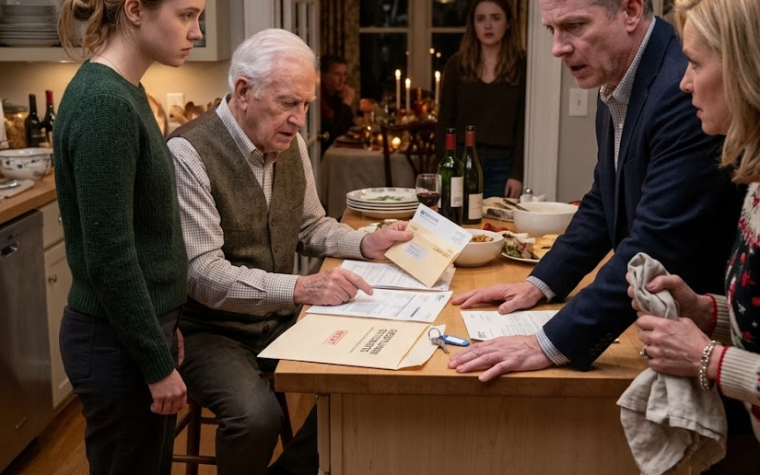
“Use another card.”
Her breathing grew louder.
“You’re punishing us because your feelings got hurt at a party.”
I waited before answering.
“No.
I’m stopping financial support because you publicly said it doesn’t exist.”
Aunt Denise murmured, “Fair enough.”
Mom exploded.
“Everyone needs to leave.
Now.”
Chairs scraped.
Someone began gathering children.
The gathering that had been designed to celebrate family dissolved under the same yellow lights where Mom had made her toast.
Before Chloe ended the call, she said, “I’m coming over.”
I almost told her not to.
Instead I said, “Come alone.”
She arrived forty minutes later wearing the same white dress.
Without the backyard lights and the relatives around her, she looked different.
Tired.
Younger somehow.
She walked into my kitchen and saw the open folder.
“That’s all of it?”
“That’s what I could document quickly.”
She sat down across from me.
I pushed the tuition receipts toward her.
She read the dates slowly.
Her expression changed as she recognized semesters, registration deadlines, emergency fees.
“I thanked Mom for some of these,” she said.
I said nothing.
“I thought she was paying you back.”
“She wasn’t.”
Chloe pressed her fingers to her forehead.
“Why didn’t you tell me?”
That question almost made me angry again.
But I answered it honestly.
“Because every time I helped, Mom asked me not to embarrass her.
She said Dad would feel ashamed.
She said you were stressed about school.
She said family doesn’t keep score.”
Chloe looked at the folder.
“But she kept score tonight.”
“Yes.”
She started crying then—not dramatically, just quietly.
I didn’t comfort her immediately.
Some moments shouldn’t be rescued too quickly.
After a while she wiped her face.
“I should’ve defended you.”
“You should have.”
“I’m sorry.”
I believed she meant it.
That didn’t erase what happened.
But it mattered.
The next morning, Mom sent me a long message.
It wasn’t an apology.
She said family matters shouldn’t be reduced to money.
She said she’d always loved both daughters.