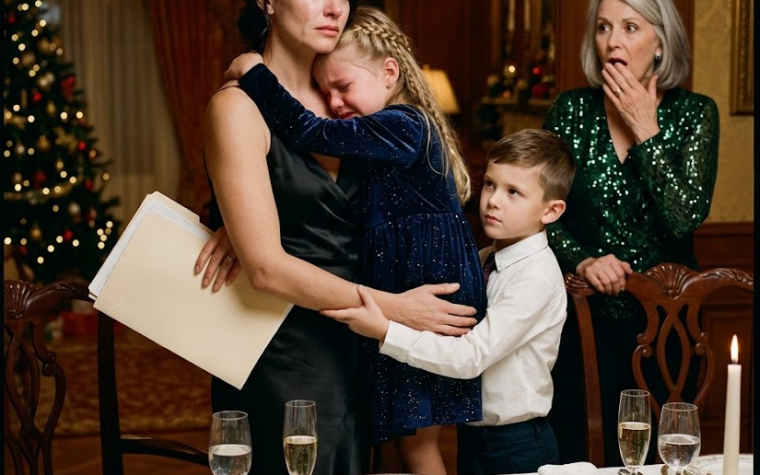
He placed it in a plain frame on a shelf.
Not as a monument to terror.
As evidence that the night had ended.
During those months Nolan also learned, through a public funding report, that several independent late-night mental-health lines were struggling financially.
The realization disturbed him.
He knew exactly what one anonymous voice at three in the morning could mean to a person who believed there was nobody left to call.
His foundation arranged grants to several programs through an independent process.
Nolan insisted on two conditions: recipients would not be required to provide caller information, and donors would receive no access to counselors.
He did not ask whether Maeve’s line was among them.
He did not want money to become a back door into her life.
Months later, Nolan agreed to speak at a small mental-health technology roundtable hosted in a conference space far less glamorous than the events he usually attended.
There were no camera flashes inside the preparation room.
No velvet ropes.
No shouting reporters.
Nolan preferred it that way.
He had come to discuss a simple principle his company had ignored for years: connecting devices was not the same as connecting people.
He stood near a side table reviewing his notes when someone behind him spoke to an event coordinator.
“The callers aren’t metrics.
If we design the system around efficiency and forget the person who is frightened at two in the morning, we’ve failed.”
Nolan stopped moving.
His hand tightened around the papers.
He knew that voice.
Not approximately.
Not because it sounded familiar.
He knew every quiet rise and fall of it.
For months he had imagined this impossible moment without allowing himself to pursue it.
Now the voice was six feet behind him.
Nolan turned.
Maeve was not what he had pictured, because after enough time he had stopped picturing her at all.
She was simply a woman standing beneath ordinary conference-room lighting, wearing a dark green blouse beneath a plain blazer, one hand wrapped around a paper cup of coffee.
Her expression shifted from professional attention to confusion as she noticed the famous CEO staring at her.
Then Nolan spoke.
“You were right about the suits.”
Maeve went completely still.
The coffee cup lowered by an inch.
Her eyes widened.
She recognized him not from television, though of course she knew Nolan Reed’s face.
She recognized his voice.
“Nolan?”
He smiled.
Not the armored smile from magazine covers.
The smaller one she had somehow always been able to hear through the phone.
“Hello, Maeve.”
For several seconds neither of them knew what to do with the strange fact of physical presence.
Then Maeve laughed once in disbelief.
“You left out a fairly significant detail.”
“You never asked my last name.”
“You said you owned an application connecting ten million people.”
“I thought that narrowed it down.”
“Not as much as you think CEOs imagine it does.”
They both laughed.
Then Maeve’s expression became cautious.
Nolan recognized the reason immediately.
“I didn’t look for you,” he said.
Her eyes searched his.
“I know.”