I read the result alone in Aaron’s kitchen.
For several minutes, I could only stare at the probability printed on the page.
Then I placed both hands over my face and cried for every first I had missed—her first word, first step, first fever, first day of preschool.
A court could restore my name to a birth certificate.
It could not return those mornings.
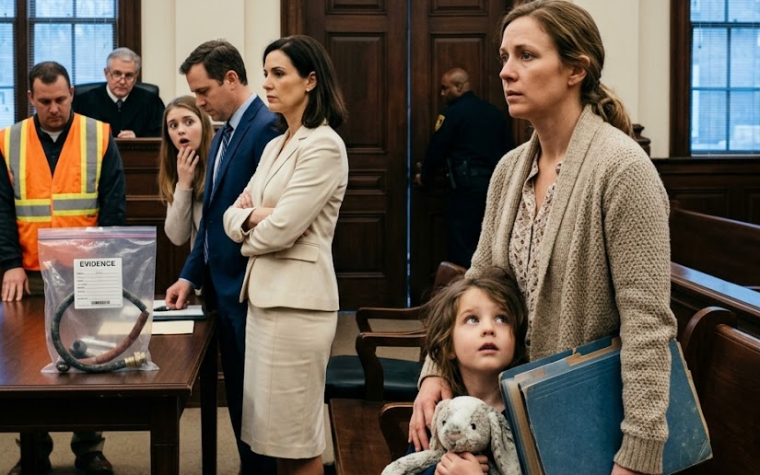
Mia was charged with fraud, falsifying records, identity misuse, and interference with my parental rights.
Her lawyer argued that fear and Martha’s influence had driven the plan.
The prosecutor answered that fear did not explain five years of withdrawals, forged messages, and deliberate concealment.
Both statements contained some truth.
Neither erased what she had done.
Family court moved more carefully than the criminal case.
Lily knew only one parent, and tearing her away from Mia overnight would have punished the child for her mother’s choices.
My first visits were supervised.
Lily called me Ryan and watched me as if I were a puzzle adults had placed in front of her.
I brought no expensive gifts.
I brought crayons, apple slices, and the stuffed dog Mia had once bought when we talked about having children.
During our third visit, Lily asked, “Why didn’t you come before?”
I looked toward the social worker, then back at my daughter.
“I didn’t know where you were.”
“Did you look?”
The question nearly broke me.
“Not in the right place,” I said.
“But I know now.”
She considered this, then handed me a blue crayon.
“Draw the ocean.”
So I did.
Over the following year, my visits became weekends.
Then holidays.
Lily learned that I burned pancakes, hated spiders, and could make up ridiculous stories about seagulls stealing hats from tourists.
I learned that she slept with one foot outside the blanket, disliked peas, and laughed exactly like Mia had before lies became the language of our marriage.
Mia eventually pleaded guilty.
Her sentence included restitution, strict probation, and a period in county custody arranged so Lily would remain with familiar caregivers and with me.
The court prohibited Mia from leaving the state with Lily and required her to cooperate with a permanent custody schedule.
She apologized during one of our final hearings.
Not to the judge.
To me.
“I told myself I was protecting her,” she said.
“The longer it went on, the more impossible the truth became.”
I believed that she regretted being discovered.
Months later, I began to believe she also regretted what she had done.
Forgiveness was another matter.
The bank calculated how much had been withdrawn after Martha’s death.
I could have demanded every dollar directly.
Instead, through the court, I directed the restitution into a trust for Lily’s education.
Mia looked surprised when she learned.
“The money was always supposed to help family,” I told her.
“It just should never have required a grave.”
I returned once to the cemetery where the empty coffin had been buried.
The headstone still carried Mia’s name and the date of the crash.
Soon it would be removed, but that afternoon it stood beneath the gray Maine sky like a monument to the man I had been.
I placed no flowers.
I touched the cold stone and said goodbye—not to Mia, because she was alive, and not to the marriage, because that had ended years before I understood it.
I said goodbye to the version of myself who believed devotion required endless punishment.
Then I walked away.
The next Saturday, my phone buzzed at exactly 9 a.m.
For five years, that sound had announced another transfer to a ghost.