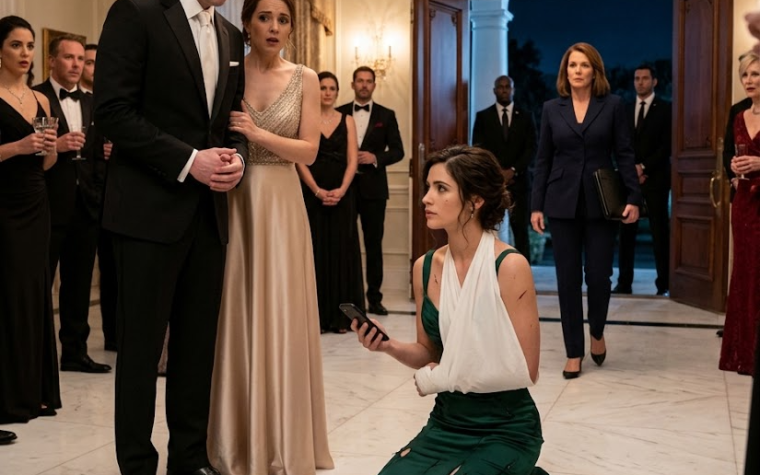
The courier lifted the first panel, and my mother stopped breathing.
I could hear the brunch around her through the phone: silverware striking china, chairs scraping across the stone terrace and the low murmur of guests who had not yet realized they were about to become witnesses.
The four-foot-tall frame had been wrapped in matte black paper and tied with the same ivory ribbon used on Ethan’s wedding invitations.
From a distance, it looked like an expensive portrait or one of the decorative mirrors his fiancée had saved to her wedding board.
Under the paper was a professionally mounted enlargement of the document Ethan and Mom had signed six months earlier.
At the top, in letters large enough to read across the terrace, were the words WEDDING ACCOUNT.
Beneath them was the total: $77,000.
The print studio had arranged the payments in a clean vertical ledger.
Villa deposit.
Catering.
Flowers.
Quartet.
Photography.
Rehearsal dinner.
Guest rooms.
Transportation.
Next to each payment was the date it had left my account.
At the bottom were two enlarged signatures.
Ethan Monroe.
Marianne Monroe, guarantor.
A sealed envelope was fixed to the back of the frame.
Inside was the formal repayment notice from my attorney.
“Alyssa,” Mom whispered.
“Why would you do this here?”
I sat on the edge of the bed in my Naples hotel room, still wearing the T-shirt I had slept in.
Morning light spilled through the thin curtains.
My untouched wedding dress hung from the bathroom door.
“Why would Ethan send me here?”
“This is different.”
“It is.
His prank cost nothing.
The frame cost me another six hundred euros.”
Someone near her asked what the display was.
Mom covered the phone, but not quickly enough.
“It’s private,” she snapped.
Ethan’s voice rose behind her.
“Turn it around.”
Another voice interrupted him.
His bride.
“Why is Alyssa’s name on every payment?”
The terrace went quiet.
That question mattered because Ethan had spent months allowing people to believe our mother had paid for the wedding.
Mom never said the lie directly.
She did something more practiced: she accepted praise without correcting it.
At the engagement dinner, an aunt had hugged her and said, “Marianne, this is unbelievably generous.”
Mom had smiled and answered, “You do what you can for your children.”
I had been standing six feet away.
I said nothing because Ethan had squeezed my shoulder afterward and whispered, “Let her have this.
It makes her feel useful.”
I had spent most of my life letting them have things.
The first time was the paper crown at Burger King.
I was seven.
Ethan told our cousins I had wet my pants at school, and everyone laughed while I stood there holding a cup of orange soda.
I had not wet my pants.
That had never mattered.
The truth was less valuable in our family than Ethan’s entertainment.