The idea felt almost radical only because I had spent so much of my life inside systems designed to make every human exchange measurable.
Check-in time.
Check-out time.
Breakfast hours.
Cancellation windows.
Service charges.
The farmhouse had rules too, of course.
It was a business.
Money changed hands.
Rooms had to be cleaned, food had to be purchased, bookings had to be managed.
But commerce had not swallowed the older instinct.
That was the part I had not expected.
The owner turned several pages in the notebook and laughed at something she found there.
“There was a man who came back three summers running because my grandmother wouldn’t let him make his own tea.”
“That was the reason?”
“He said nobody at home made it properly.”
“Did she?”
“Probably not.
But she told him she did.”
We both laughed.
Then she closed the notebook.
There was no dramatic announcement.
No speech about tradition.
She put it back in the cabinet, collected my plate, and asked whether I wanted more toast.
I said no.
She brought some anyway.
I spent the rest of that morning thinking about the word I had seen everywhere since arriving in Ireland.
Fáilte.
It is usually translated simply as welcome.
But the word had begun to feel different after breakfast.
Welcome, in ordinary commercial language, can become decoration.
It can be printed above a doorway, placed on a hotel television screen, written in a brochure, or delivered by someone trained to say it cheerfully.
The older idea represented by fáilte carries more weight.
Historically, hospitality in Ireland was not merely admired as good manners.
Providing for guests and travelers was deeply embedded in social expectation.
Across generations, that expectation survived less as formal obligation than as habit, pride, and memory.
You could still feel its outline in that farmhouse.
Not because the owner gave me a lecture about history.
Because she refilled my tea before I knew I wanted more.
Because she sat down.
Because she told me about her grandmother without turning the story into a performance.
Because when I finally stood to leave the breakfast table, she looked at the food remaining on my plate and seemed personally disappointed that I had not eaten enough to sustain a small rugby team.
When I left Ballyvaughan, she walked me to the door.
“You’ll have weather going west,” she said.
I looked at the sky.
“Bad weather?”
She shrugged.
“Weather.”
It was the most Irish forecast I received during the entire trip.
The road toward Dingle gave me plenty of time to think.
On the original tour package, I had been told exactly what I would see.
There were departure times, recommended stops, historical summaries, maps, and carefully selected experiences intended to make sure I did not miss anything important.
Yet the memory I kept returning to was not a famous view.
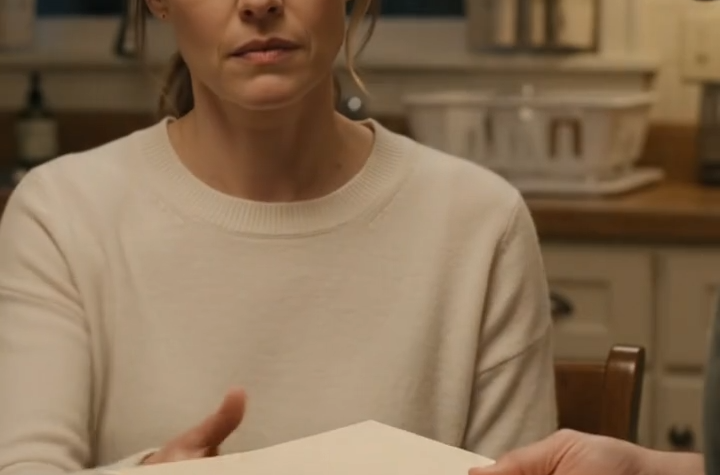
It was a kitchen table.
A cold cup of tea.
A notebook I had barely read.