Then I asked, “Do you believe me now?”
His face tightened.
“I believe I should have believed you before you had to disappear.”
That answer landed differently than an apology.
It didn’t excuse anything.
It acknowledged something.
Before I could respond, the monitor changed.
A nurse entered quickly.
Then another.
The baby’s heart rate had dropped.
The room filled with motion.
A doctor examined me and made the decision within minutes.
The baby needed to be delivered.
Now.
Because he was premature and showing signs of distress, the medical team prepared for an emergency delivery in the operating room.
Fear hollowed me out.
Julian came beside the stretcher as they began moving me.
“Harper.”
I looked at him.
“If anything happens—”
“Don’t.”
“You need to listen.”
His eyes were wet.
I had never seen Julian Sterling cry.
“Our son is not an heir,” I said.
“He is not a Sterling asset.
He is a baby.”
“I know.”
“If I cannot speak for him, you protect him from everyone.
Including your mother.”
“I will.”
“Promise me.”
“I promise.”
Our son was born twenty-seven minutes later.
He was tiny, furious, and alive.
His first cry was thin but unmistakable.
I sobbed when I heard it.
Julian bent his head beside mine and broke completely.
The neonatal team took the baby for evaluation because of his early arrival.
Before they carried him away, a nurse brought him close enough for me to see his face.
He had dark hair plastered against his head and one fist pressed beneath his chin.
Julian whispered, “He’s beautiful.”
For once, the billionaire who always knew what to say had nothing else.
Our son spent the next several days in the neonatal unit.
He needed help regulating his temperature and feeding, but the doctors expected him to recover fully.
While I healed, another story unfolded outside the hospital.
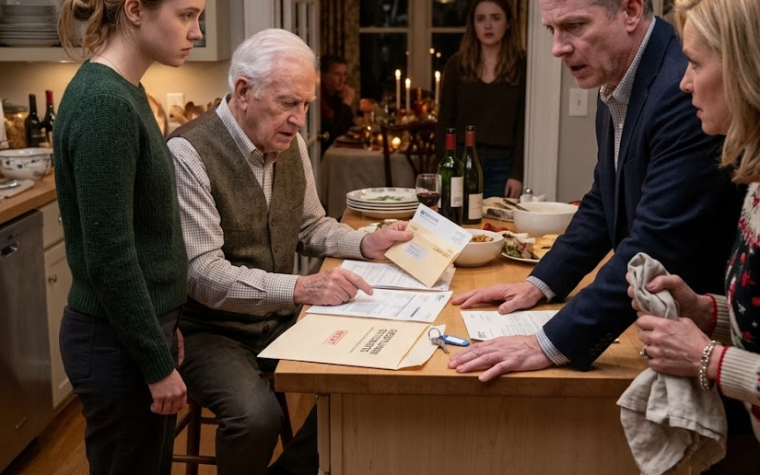
Julian had ordered an independent review of every version of our divorce agreement.
The evidence was painfully simple.
His signed twenty-three-page agreement had been completed first.
The four-page addendum had been drafted afterward under Arthur’s supervision following communications with Victoria.
Arthur had not forged Julian’s signature.
He had done something more calculated: he had attached the additional language to a document Julian had already executed and presented the entire packet to me as though Julian had approved every page.
If I had signed without reading backward, the resulting dispute would have been ugly, expensive, and terrifying—even if the clause eventually failed in court.
That had been the point.
Pressure me first.
Fight later.