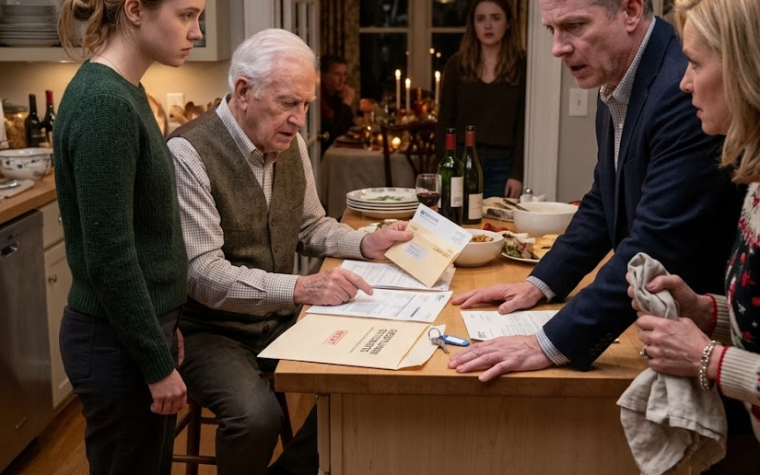
Marcus had organized the evidence into separate folders: deeds, closing records, bank transfers, security footage, the occupancy agreement, and statements from the two private guards.
Greg dropped a legal demand on the conference table.
His attorney claimed I had improperly disposed of marital assets and retaliated against Greg’s family.
My counsel read the first page, then asked for evidence that Greg owned either property.
There was none.
Greg insisted the beach-house funds had passed through an account he could claim as marital property.
Marcus produced the wire history.
The money had moved directly from my separate investment account to the closing agent.
Greg said he had contributed indirectly by supporting my career.
I looked at him.
During our marriage, I had guaranteed his office lease, paid the balance on his car, covered his club dues, and transferred money whenever his company missed payroll.
Eight years of records showed money moving in one direction.
Toward Greg.
Never from him.
Then my counsel played the security recording.
Greg’s voice filled the conference room.
“Get the rest of your junk off my porch before I call the police.”
The image showed my mother standing near the road while my father searched the grass for his medication.
Greg shifted in his chair.
His attorney stopped taking notes.
The next clip showed Greg kissing the blonde woman.
Then came his statement inside the kitchen.
“Diana is too busy to notice anything.
This place is ours now.”
His attorney leaned toward him and whispered something.
Greg’s face reddened.
“You are trying to destroy me,” he said.
“No,” I replied.
“I was working in my office.
You did this by yourself.”
He accused me of planning the entire situation.
He said the cameras were a trap, the documents were manipulative, and his parents’ agreement had never been explained to him.
Marcus placed Greg’s signed acknowledgment on the table.
Greg stared at his own signature.
He had signed it six years earlier without reading past the page where he was listed as the emergency contact.
That had always been Greg’s weakness.
He paid attention to any line that made him look important and ignored every line that defined his limits.
His attorney requested a private conversation.
They stepped into the hall.
Through the glass wall, I watched Greg argue while his attorney repeatedly shook his head.
Ten minutes later, the attorney returned alone and withdrew the immediate demand concerning the beach house.
Any legitimate financial issues, he said, could be addressed through an orderly divorce process.
That was the first time anyone had used the word divorce aloud.
Greg reentered just in time to hear it.
His expression changed from fury to disbelief.
“You are ending our marriage over one mistake?”
“One mistake?” I asked.
He looked toward the paused camera image of my parents’ suitcases in the grass.
Then he looked away.
I removed him from accounts that were legally mine, canceled his access to company-owned vehicles and credit cards, and transferred all further financial communication to counsel.
I did not empty shared accounts or hide money.
I did everything through documented channels because I refused to become the reckless person he needed me to be.
Without my guarantees, Greg lost the downtown office within two months.
The private club suspended his membership when the payments stopped.
The imported car returned to the leasing company because the lease belonged to one of my entities.
The image he had maintained for years did not collapse because I attacked it.