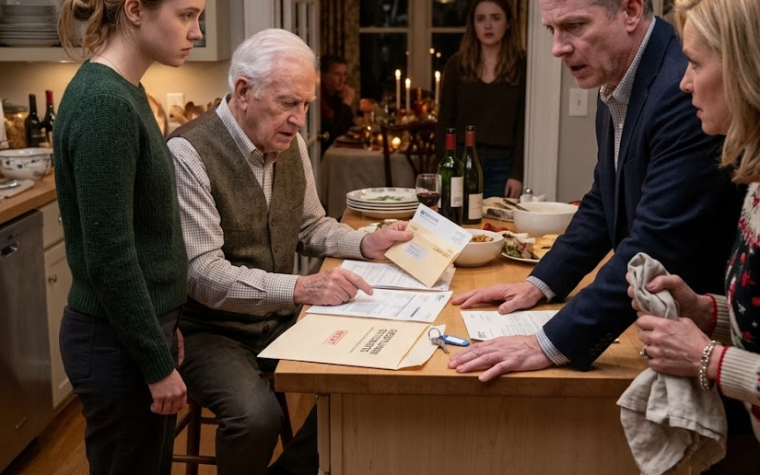
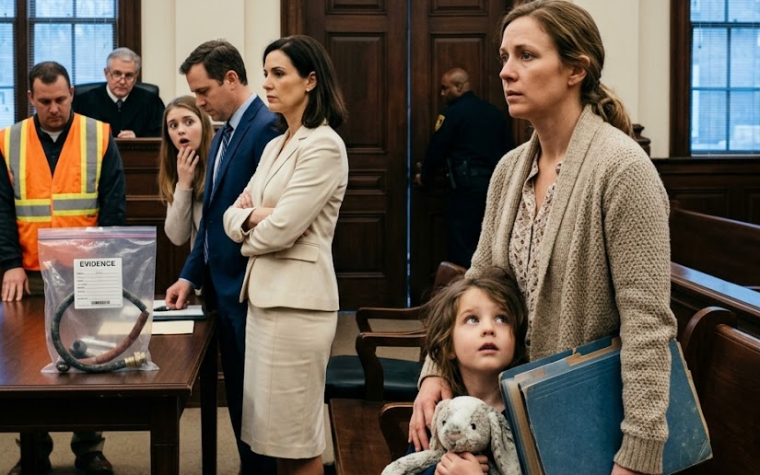
That last attack hurt her deeply.
For years, Julian had told her that fear made her unreliable.
Now his legal team used polished language to make the same argument.
But Chloe did not retreat.
She gave a full statement.
She described the first time he shoved her after an argument, the apologies that followed, and the gradual change from affection to surveillance.
She explained how he used medical language to frighten her during pregnancy, telling her that stress could harm the baby and that disobedience could create fatal complications.
She also described the threat that finally convinced her she could not leave safely: Julian told her he would control the C-section, the medications, and the people allowed in the operating room.
He had turned childbirth into a hostage situation.
The hospital’s independent review uncovered no evidence that Chloe’s delivery required Julian personally.
Her chart contained enough information for a qualified maternal-fetal medicine team to proceed safely.
His claim that only he understood the case was another instrument of control.
Three weeks later, Chloe went into labor earlier than expected.
For one terrible moment, as we entered the hospital through a private entrance, she stopped walking.
The building itself had become part of her fear.
The marble lobby, the white coats, the smell of antiseptic—everything reminded her of Julian.
“I can’t do this here,” she whispered.
I wanted to promise that nothing bad would happen.
But Julian had taught both of us the danger of promises made by people who believed they controlled every outcome.
So I told her the truth.
“You are not alone.
The team is independent.
Every decision belongs to you.
I will stay until you tell me to leave.”
She nodded.
The delivery became an emergency C-section, but not the kind Julian had threatened.
There was no hidden punishment, no deliberate delay, no husband controlling the room.
The surgeon explained each step.
The anesthesiologist spoke directly to Chloe.
A nurse kept one hand where Chloe could reach it.
I remained beside her head while the monitors sounded around us.
When her daughter cried for the first time, Chloe closed her eyes and wept.
Not from fear.
From survival.
The baby was small, furious, and healthy.
Chloe named her Grace.
Julian was later charged with domestic battery, coercion, and intimidation.
Additional professional allegations remained under review.
His medical license was suspended pending the outcome of the proceedings, and the hospital permanently terminated his administrative role.
The institution removed his photograph from the lobby.
Chloe never asked to watch.
She did not want her healing measured by his humiliation.
She moved into a secured home owned through a private family trust, began trauma counseling, and rebuilt contact with friends Julian had pushed away.
Some days she spoke with startling confidence.
Other days a closing door made her freeze.
Recovery did not arrive like a courtroom verdict.
It came in uneven pieces.
The first time she handed Grace to someone else without watching every movement.
The first night she slept for four uninterrupted hours.
The first appointment where a male doctor entered the room and she asked him to explain something instead of silently agreeing.
Months after the birth, Chloe and I returned to Room 4B with investigators for a final walkthrough.
The oak door had been removed during the safety review.
The hospital replaced it with a lighter door that could not be locked by staff without an emergency override visible from the corridor.
Chloe stood where she had once begged me to do nothing.
“I thought you saved me that day,” she said.
“I should have seen it sooner.”