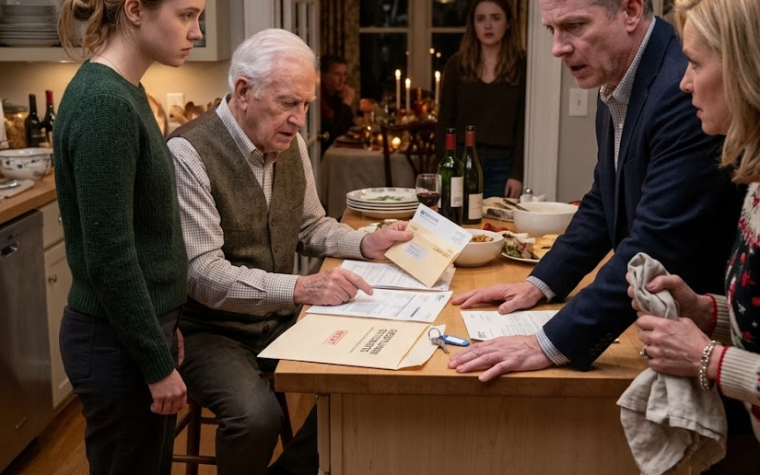
My attorney produced the account notices he had redirected to a private email address and the electronic approvals made using credentials I had never been given.
He accused the accountant of bias.
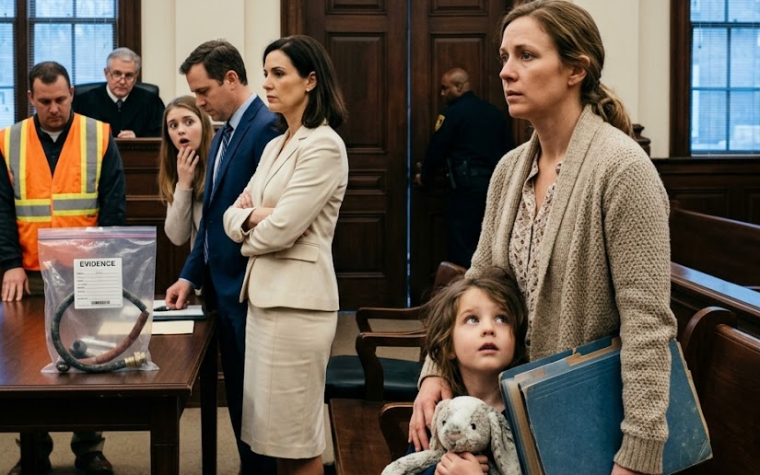
The bank produced its own records.
He suggested the affair began after our marriage had already failed.
The hotel receipts began months before the conversation in which he first told friends we were having problems.
Each denial created another question.
Each question led back to the folders in the white box.
Celeste hired her own attorney when she learned the apartment could become part of the divorce proceedings.
She moved out before the first hearing and provided documents showing that Nathaniel had represented the property as his separate asset.
Their relationship did not survive the investigation.
I did not celebrate that.
By then, Celeste mattered less to me than the system of lies Nathaniel had built around us.
She had been a participant, but he had been the architect.
The divorce took months, not minutes.
There were hearings, disclosures, arguments, and days when pregnancy made every legal decision feel twice as heavy.
Nathaniel fought over money he had already tried to hide.
He demanded privacy after choosing public humiliation.
He sent apologies that sounded like negotiations and promises that ended with conditions.
I answered through my attorney.
When our daughter was born, Hannah stood beside me in the hospital.
Nathaniel visited under boundaries we had agreed upon through counsel.
He held the baby carefully and cried.
For a moment, I saw the man I had once believed he was.
Then he asked whether the birth might persuade me to delay the divorce.
I told him no.
Love for our daughter required stability, not performance.
The final settlement restored the money traced from our joint investments and accounted for the Brooklyn property as part of the marital estate.
Nathaniel kept his career, but not the illusion that his choices carried no cost.
Friends stopped protecting him with silence.
Several people who had watched the baby shower later provided statements confirming what he had said and how he had introduced Celeste.
I did not receive a dramatic public apology.
Real consequences were quieter.
They appeared in signed disclosures, transferred funds, revised ownership records, and a parenting agreement that no longer depended on Nathaniel’s promises.
The Manhattan estate was eventually sold.
I moved into a smaller home with wide windows, a nursery painted warm cream, and no rooms filled with secrets.
Hannah helped me unpack.
At the bottom of one moving carton, she found the plain white box.
“Do you want to keep this?” she asked.
The folders were gone.
The evidence remained with my attorney, but the box itself was empty except for the black ribbon.
I thought about the garden, the photograph beside the cake, and Nathaniel’s face when the gate opened.
For months, I had believed that afternoon would be the moment my life broke apart.
It was not.
My life had broken quietly long before, in an office where my husband laughed with another woman and said I suspected nothing.
The baby shower was simply the moment I stopped carrying the broken pieces for him.
I removed the ribbon, folded the box flat, and placed it in the recycling bin.
Then I returned to the nursery, where my daughter was waking from her nap.
She reached for me without hesitation.
I lifted her into my arms and stood in the sunlight, no longer the perfect wife in a perfect garden, no longer smiling to protect a man who had mistaken my dignity for surrender.
Nathaniel had thanked his mistress because he believed I was powerless.
He was wrong.
I had not needed to scream.
I had only needed to open the box.