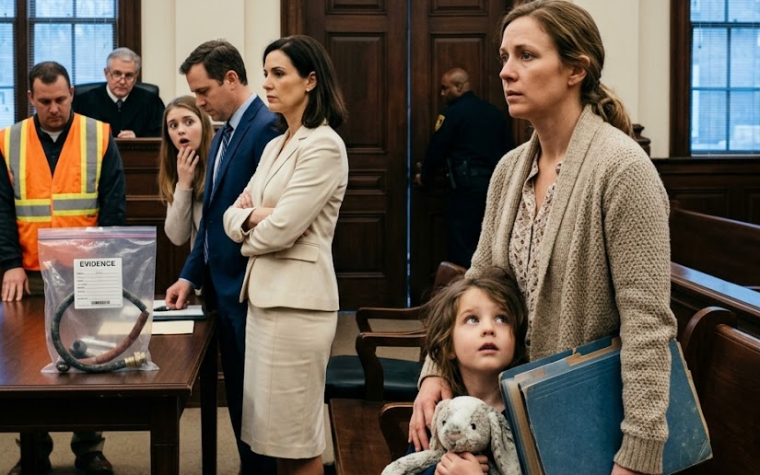
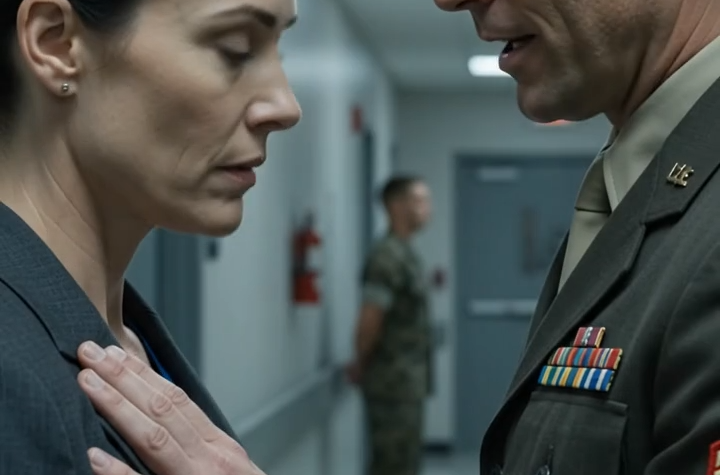
The board saw six months of evidence.
Together, they ended the version of Adrian that had survived by separating his private cruelty from his professional power.
Executives who had once laughed at his jokes sent me apologies.
Some were sincere.
Some were written to protect their own reputations.
I did not try to distinguish between them.
The human resources vice president wrote that she was ashamed she had looked down after the slap.
I answered with one sentence.
Next time, do not look down.
Weeks later, I returned to ValeTech’s boardroom to deliver the final forensic archive.
The swelling in my lip was gone.
A thin line remained where my tooth had cut the skin, visible only when the light struck it from the side.
The board chair signed the receipt for the evidence.
“Your work protected this company,” she said.
I closed the case file.
“The whistleblower protected it,” I replied.
“I proved the whistleblower was right.”
Adrian had spent years insisting that he was ValeTech.
Without him, he claimed, the company would collapse.
It did not.
An interim chief executive took control.
The board corrected the risk disclosures, cooperated with the required reviews, and began rebuilding the security program Adrian had treated as a public-relations instrument.
His career did not end because I smiled after he struck me.
It ended because he had mistaken silence for weakness in every part of his life.
He thought employees who feared him would never preserve evidence.
He thought directors impressed by him would never question him.
He thought a wife who had endured humiliation would always protect the man humiliating her.
The phones in the ballroom proved the assault.
The folder proved the pattern.
Months later, after the legal filings had begun and the house no longer felt like a place I had to return to, I found the wedding ring in the small pocket of my handbag.
I had removed it the night of the dinner without remembering when.
For a long moment, I held it beneath the same thumb that had wiped blood from my lip.
Then I placed it inside an empty evidence envelope.
Not because the marriage was part of the corporate case.
Because I finally understood that leaving required its own record.
I sealed the envelope, wrote the date across the front, and put it away.
For seven years, Adrian had told me where my place was.
That night in the ballroom, surrounded by witnesses and glowing phones, I stopped believing him.