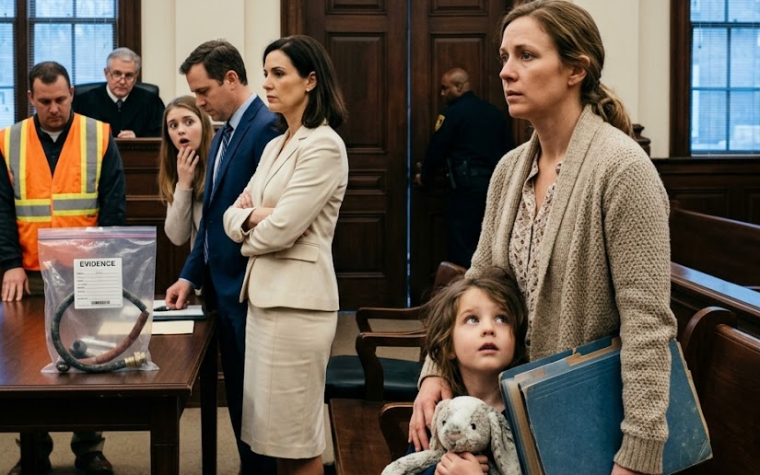
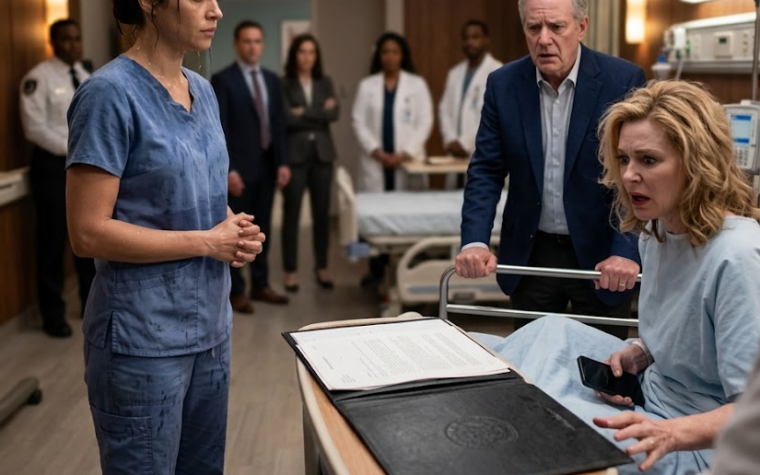
None of them had asked a single question.
My father turned another page.
There were diagrams of the system’s development history, summaries of validation trials, and the final equity schedule.
The technical details were dense, but the dates were clear.
The company had existed for years.
Long before I resigned.
Long before the article.
Long before he canceled my credit cards to teach me what helplessness felt like.
“You used my money,” he said.
The accusation arrived with such confidence that Tyler almost nodded.
I had expected it.
I reached across the table and turned to a tab near the back of the folder.
“No.”
The page showed the initial funding history.
A small medical innovation grant.
Prize money from a university competition.
Then revenue from early research partnerships.
Every dollar was documented.
“I never touched the trust,” I said.
“I knew what would happen if you discovered the company.
You would either kill it or claim it.”
His jaw flexed.
“I would have protected you.”
“You would have controlled me.”
“There is no difference when the stakes are this high.”
“That sentence is the reason I never told you.”
My mother inhaled sharply.
Tyler closed the folder as if ending the discussion could erase it.
“So you’re rich,” he said.
“Congratulations.
That doesn’t make quitting medicine noble.”
“I did not quit medicine.”
“You left the operating room.”
“I left a residency that was destroying me.
I built a tool surgeons are already using to prevent complications.”
Tyler gave a small, brittle laugh.
“You wrote software.
Let’s not pretend you performed the operations.”
“No,” I said.
“I helped thousands of surgeons see danger earlier.”
My father’s eyes snapped toward me.
“Thousands?”
I opened the folder again and removed a separate packet.
This one carried the licensing summary from his own hospital.
He recognized the layout before he reached the first page.
I watched the exact moment he understood that the platform he had praised over lunch was not merely similar to mine.
It was mine.
His hospital had signed the license eleven days earlier.
His own approval appeared in the authorization chain.
He stared at the unreadable signature block as though his name had betrayed him.
“You reviewed it?” I asked.
He said nothing.
“You told us the developers were geniuses.”
Tyler looked from him to me.
My mother pressed her fingertips against her mouth.
My father finally pushed the packet away.