Julian had never spoken to her that way.
His whole life, Margaret had translated control into protection.
She chose his schools, corrected his friendships, managed his reputation, and removed consequences before they could reach him.
When he married Eleanor, Margaret praised her obedience.
When Eleanor began questioning decisions, Margaret called her ungrateful.
When the pregnancy produced the long-awaited son, Margaret stopped speaking of Eleanor as a person at all.
She became a doorway through which the heir would arrive.
Julian had allowed it because the arrangement benefited him.
That truth hurt more than discovering Margaret’s scheme.
At the emergency hearing, Eleanor appeared by secure video from an undisclosed location.
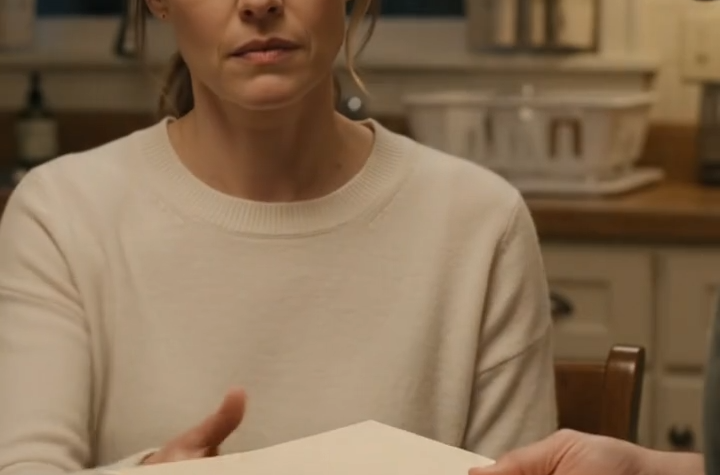
She wore a simple cream blouse.
Her hair was tied back, and the baby slept against her chest beneath a pale blanket.
It was the first time Julian saw his son.
He leaned toward the screen before he could stop himself.
Eleanor did not look at him.
The family lawyer confirmed that Margaret had attempted to pressure Eleanor without independent representation.
The retreat nurse authenticated the envelope and USB.
Samuel confirmed that Eleanor had left voluntarily and safely.
He also repeated Julian’s airport statement without embellishment.
Margaret’s attorney argued that she had spoken emotionally and never intended to carry out the threat.
The judge asked why she had instructed retreat staff to restrict Eleanor’s records.
Margaret said she was preventing confusion.
The judge asked why she delayed informing Julian of the birth.
Margaret said he needed rest.
The judge asked why a recovering mother had been offered money while being told she might be declared unstable.
Margaret’s answer became a speech about the Whitmore family name.
That was when she lost control.
“She had nothing before us,” Margaret said.
“No one would know her name without my son.
That child belongs in our home, not hidden in some apartment while she plays the victim.”
The courtroom went still.
Eleanor finally raised her eyes.
“My son does not belong to a house,” she said.
“He does not belong to a name.
He is not an inheritance anyone can collect.”
Julian watched the judge write something down.
The temporary order granted Eleanor sole physical custody.
Julian would receive supervised visits until the court could evaluate whether he understood the child’s needs separately from his family’s demands.
Margaret was forbidden from contacting Eleanor, approaching the baby, or using employees to discover their location.
The court also preserved the marital accounts until the divorce could be resolved.
Margaret left the hearing furious.
Ava left Julian two days later.
She did not leave because she suddenly developed sympathy for Eleanor.
She left because the photographs from St.
Barts were now legal exhibits, reporters had begun calling her building, and Julian could no longer promise a quick divorce followed by an uncomplicated life.
“This is your family disaster,” she told him.
“I never agreed to be dragged into court.”
Julian almost reminded her that she had publicly celebrated winning him.
Instead, he watched her pack the few belongings she had left at his apartment.
For once, there was no woman nearby willing to absorb the consequences of his choices.
The divorce took months.
Eleanor never released the recording publicly.
She did not need strangers to punish Margaret.
The court heard it.
The lawyers heard it.
The Whitmore relatives who had once treated Eleanor like a quiet accessory learned enough to stop accepting Margaret’s version of events.