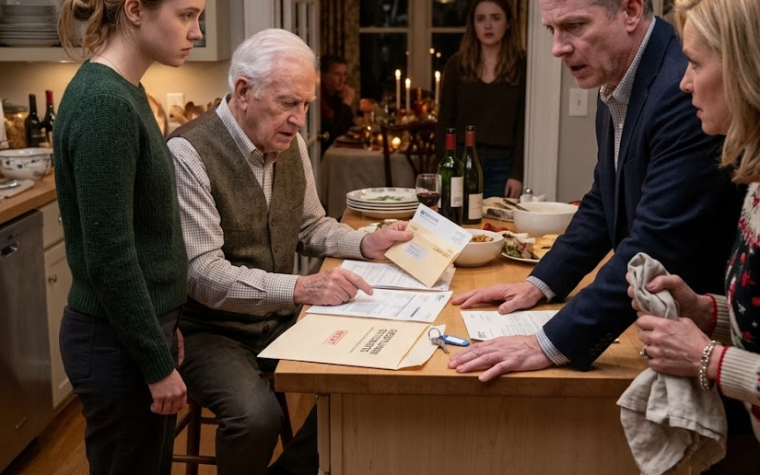
He had no answer.
Then his phone buzzed.
Samuel glanced down.
A second later, his face hardened.
“What did you do to the accounts?”
There it was.
The fear I had been waiting for since he entered the room.
I folded my hands on the table.
“I protected them.”
“You froze my cards.”
“I locked the joint cards and reported the disputed transfers.
The banks put temporary restrictions on outgoing activity while they review them.”
“You can’t just freeze everything because you’re angry.”
“I didn’t.”
He looked at me.
“I documented nineteen months of unexplained movement from accounts carrying my name and reported it.
I didn’t empty anything.
I didn’t hide anything.
I stopped more money from disappearing while I found out what had already gone.”
Samuel reached for his phone and began tapping rapidly.
I watched the same right thumb I had seen scrolling as he walked past Starbucks.
He tried one account.
Then another.
His breathing changed.
The man who had not looked over his shoulder once in the airport was finally looking around for an exit.
“You planned this,” he said.
“I discovered you yesterday.”
“You contacted banks overnight?”
“Yes.”
“Who else have you spoken to?”
That question told me more than any confession.
Samuel was no longer worried about whether I believed him.
He was calculating exposure.
“A lawyer,” I said.
His face went still.
I had made that call before sunrise.
The advice had been simple: document first, do not drain joint assets, do not destroy anything, do not retaliate, and do not let suspicious transfers continue unchecked if the financial institutions were willing to restrict them during review.
So that was what I had done.
Samuel stood again.
“This is my house too.”
“I know.”
“That is my money too.”
“I know.”
“You’re acting like I stole from you.”
I looked at the folder.
“You used money from our life to finance a life you were hiding from me.
We can let the records decide what word belongs on it.”
He stared at me for a long time.
Then the anger drained from him and something smaller replaced it.
“Pris, please.”
Twenty-four hours earlier, that voice might have undone me.
It had traveled across imaginary oceans into our kitchen.
It had told me he missed me.
It had made me worry that he was overworking himself in London.
Now I knew how easily he could manufacture distance.
“What happens now?” he asked.