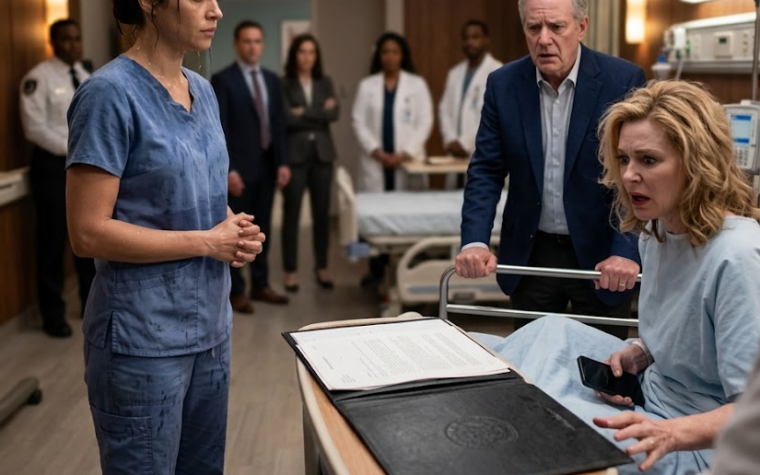
Grant’s attorneys argued that the nursery was intended for a child and therefore should not be treated as wasteful spending.
Morgan answered that no one was blaming the unborn child.
The issue was Grant’s decision to spend joint funds secretly, disguise the payments, deny basic furniture to Lily, and prepare my separately owned home for another woman’s occupancy.
The judge ordered a full forensic accounting.
Grant was also required to reimburse the marital estate for the unauthorized nursery expenditure if the final review confirmed the transfers.
Temporary support for Lily was calculated from his actual income rather than the smaller figure he first submitted.
His attempt to portray me as unstable ended quickly.
The hospital records showed that I had followed every medical recommendation after giving birth.
My emails to Morgan were calm, dated, and specific.
The designer’s accidental message had arrived before I knew anything about Savannah’s nursery.
There was no jealous investigation.
The evidence had landed in my hands with Grant’s name on it.
The hospital board asked Grant to resign from its fundraising committee.
Eleanor stepped away from gala leadership after several major donors objected to her comments about sons, daughters, and legacy.
The hospital continued its work without them.
That mattered to me.
Children who needed care should not lose funding because the Whitmores had confused charity with ownership.
Savannah did not move into Magnolia Ridge.
Through her own attorney, she later confirmed that Grant had told her the house belonged to him and that I planned to move after Lily’s birth.
She also provided messages in which he promised the east wing would become their private family space.
I did not meet with her.
I did not need to.
Her statement was enough.
Whatever happened between Savannah and Grant afterward belonged to them.
Her baby had not created the betrayal.
Grant had.
Eleanor sent me a handwritten letter asking for access to Lily.
She did not apologize for saying a son mattered more.
She wrote that emotions had been high and her words had been misunderstood.
I returned the letter through Morgan with one condition: any future relationship with Lily would begin only after Eleanor acknowledged, in writing and without excuses, that Lily’s value had nothing to do with carrying the Whitmore name.
No second letter came.
Months later, the divorce settlement required Grant to reimburse the full $184,320 to the marital estate.
Because Magnolia Ridge was my separate property, he received no ownership interest in the house.
His personal belongings were collected under supervision.
The custody schedule included safeguards limiting his ability to expose Lily to public family disputes or use her in foundation publicity.
The nursery remained locked during the case.
When it was finally mine to change, I entered alone.
Dust had settled on the gold mobile.
The falling-star chandelier still hung above the imported crib.
The words “Welcome home, baby Whitmore” remained painted across the wall.
I stood there for a long time.
Then I called Maison Row.
Some of the furnishings could be resold.
The proceeds went into an account for Lily.
I kept none of the silk, none of the gold, and none of the objects chosen to celebrate one child by diminishing another.
I had the painted words covered.
In their place, the wall remained plain.
I bought Lily a simple wooden crib.
It cost less than Grant had spent on one curtain panel.
Morgan helped me assemble it badly, then correctly, while Lily watched from a blanket on the floor.
There was no chandelier above her.
No velvet chair.
No family name painted on the wall.
Only morning light, clean sheets, and the music box I had once heard playing behind a locked door.
I placed Lily in the crib after her feeding.
She wrapped her fingers around mine and refused to let go.