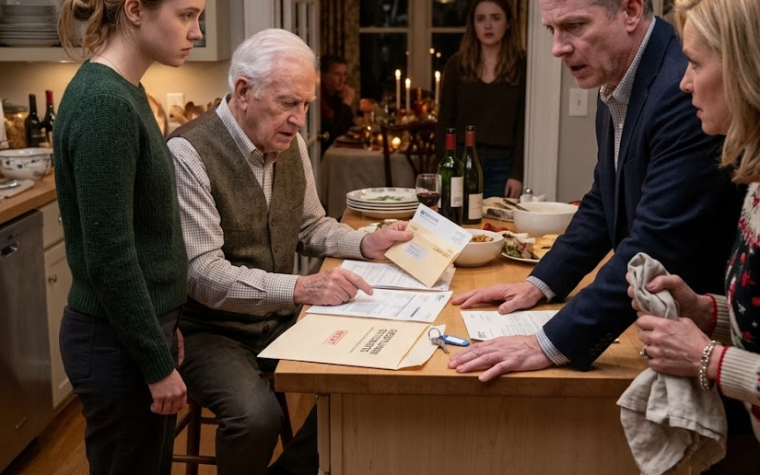
He looked at me for a long time.
Then he said, “You should have fought me sooner.”
“Maybe.”
“You let me believe I won.”
“I was protecting Mam.”
“And after she got sick?”
“She kept asking me to wait.”
He rubbed both hands over his face.
“We wasted our whole lives on this.”
“No,” I said.
“We built our whole lives around it.
That is different.”
The family remained quiet, but the silence had changed.
It was no longer protecting a secret.
It was making room for the truth.
Declan did not apologize that night.
Real consequences rarely arrive with perfect speeches.
He left the dining room, walked upstairs, and closed the bedroom door where he had slept as a boy.
The relatives stayed behind, reading Mam’s letter in turns.
Some apologized to me.
Others explained why they had believed him.
A few said nothing because they understood that regret did not require immediate forgiveness.
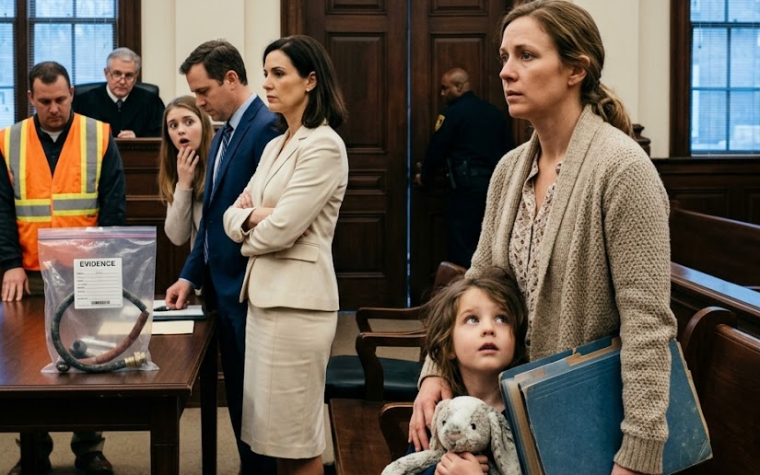
The legal dispute lasted seven months.
The handwriting examiner confirmed that I had not signed the transfer.
The notary record proved the document could not have been properly witnessed.
Declan’s solicitor advised him not to contest the original deed.
He agreed to restore my half ownership and pay most of the legal fees.
He could not afford to buy my share outright.
For a while, it seemed the house would have to be sold.
Then Declan proposed something neither of us expected.
He would refinance his business property, buy part of my interest, and convert the ground floor of Mam’s house into two small rental units.
The income would cover payments on the remainder.
I would retain a smaller ownership share until the debt was settled.
It was practical, imperfect, and bound by more paperwork than trust.
I accepted.
The following Christmas, the family gathered at the same table.
The chair assignments had not yet relaxed.
Old architecture does not disappear because one wall is removed.
Declan sat at one end.
I sat near the other.
For most of the meal, he spoke to the room.
Then the gravy reached him.
He picked it up, hesitated, and looked directly at me.
“Maeve,” he said, “do you want this?”
It was not an apology.
It was not reconciliation.
It was only my name, followed by a question.
After thirty-nine years, it was enough to change the shape of the table.
“Yes,” I said.
He passed the gravy to me instead of around me.
And this time, nobody pretended not to notice.