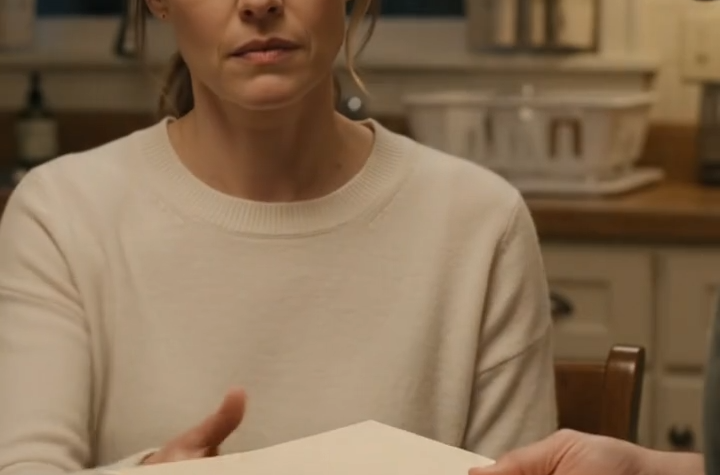
“Of disappointing you.”
He glanced away.
“That’s not the same thing.”
“It felt the same when I was standing outside the door with that folder.”
There were many versions of Amanda Rollins that Carisi had known over the years.
The sharp one.
The funny one.
The stubborn one.
The exhausted one.
The one who changed the subject when something mattered too much.
The one who could read everybody in a room except herself.
And then there was this version—the woman who had finally learned to say she was afraid before fear turned into distance.
Carisi looked down again.
On the second page, the language changed from formal conditions to Amanda’s notes.
He recognized her handwriting immediately.
Questions.
Schedules.
Possible problems.
And beside one section, three words underlined twice:
Talk to Carisi.
His throat tightened.
“You wrote my name all over this thing.”
Amanda almost smiled.
“Yeah.”
“And still didn’t tell me.”
“Yeah.”
He shook his head.
“You are unbelievable.”
That time there was warmth beneath it.
Amanda heard it.
Some of the tension left her shoulders.
“I’ve been called worse.”
“By me.
Recently.”
“About four minutes ago.”
“I was upset.”
“You were dramatic.”
“I am not dramatic.”
She gave him a look.
For the first time that night, he laughed.
It lasted only a second, but the room changed with it.
That was how their relationship had always worked.
Rarely through grand speeches.
Almost never through perfectly timed declarations.
The important changes happened in smaller places: a chair pulled closer, a joke offered at exactly the right moment, a hand left on the table long enough for the other person to reach it.
Carisi put his hand on the folder.
“Do you want it?”
Amanda’s smile disappeared.
There was the real question.
Not whether she had betrayed him.
Not whether she had chosen work over their life.
Whether she still wanted a part of herself she had been afraid to admit mattered.
“Yes,” she said.
He nodded slowly.
“Okay.”
Amanda blinked.