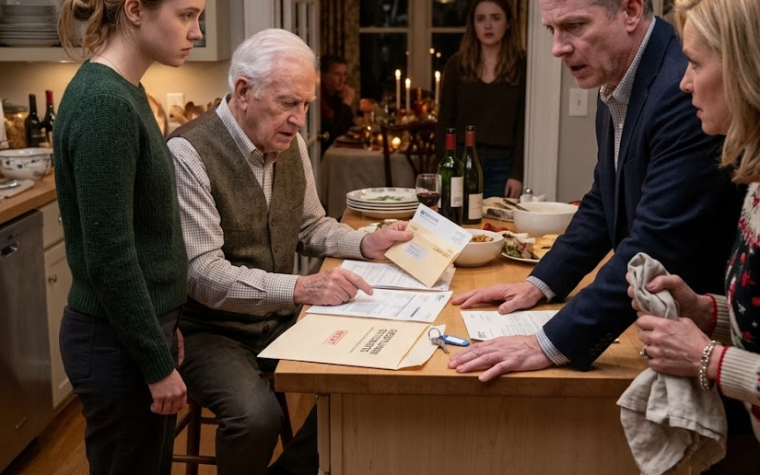
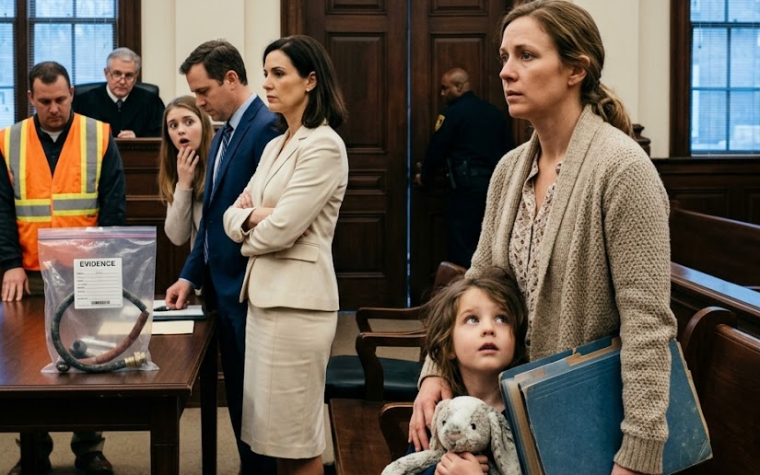
His expression shifted when I opened the cover.
Not because there was some dramatic court order inside.
There wasn’t.
There was no custody petition.
No divorce filing.
No secret recording.
No signed declaration from someone powerful enough to make my husband suddenly afraid.
The folder contained something much simpler.
Information.
Pages of my own handwritten notes from a consultation with a family-law attorney.
Questions about custody.
Questions about parenting time.
Questions about what courts actually consider when parents separate.
Questions about whether having legal connections automatically meant someone could take a child away from the parent who had been there every day.
My husband stared at the folder as if it were more dangerous than it was.
“You went to a lawyer?”
His voice had changed.
I closed the cover.
“I asked questions.”
“About divorcing me?”
“About understanding what my life actually looks like if this marriage ends.”
He gave a short laugh, but there was no humor in it.
“So that’s what you’ve been doing behind my back.”
The old version of me would have immediately started defending myself.
I would have reminded him that I had spent years trying.
I would have listed dinners, appointments, bedtime routines, holidays, arguments swallowed because our son was in the next room.
I would have tried to convince him that I was not cruel, not selfish, not reckless.
That night, I did not.
I simply said, “I needed to know whether I was staying because I wanted to stay or because I was scared.”
His jaw tightened.
“And what did your lawyer tell you?”
The question was sharper than it needed to be.
That was when I understood something important.
For years, my husband had been comfortable with my fear because fear made me predictable.
He did not have to order me to stay.
He did not have to threaten me directly.
All he had to do was mention that he knew people, let my imagination finish the sentence, and watch me return to the life I had already convinced myself I deserved.
The attorney had not promised me victory.
In fact, she had been careful not to promise anything.
She had listened while I explained that my son was still little, that I was terrified of losing time with him, that my husband had professional and legal connections, and that I had spent years imagining some courtroom where everyone already knew everyone except me.
Then she had asked me a question.
“Who takes care of your son?”
I almost laughed.
“I do.
We both do, technically, but I handle most of the daily things.”
“Which things?”
So I started listing them.
Meals.
Baths.
Bedtime.
Appointments.
Clothes.
Knowing which food he suddenly refused to eat that week and which stuffed animal had to be beside him before he would sleep.
The ordinary work of loving a child.
The invisible work.
The attorney wrote while I spoke.