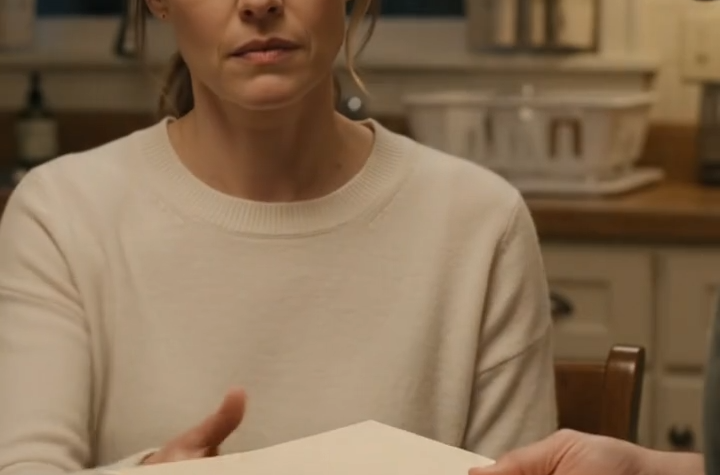
My wife turned the folder toward me, but I could not make myself look down.
I watched her instead.
She still wore her hospital badge.
A faint crease crossed one cheek from the mask she had worn through most of her shift.
Her hair was pulled back too tightly, and the skin beneath her eyes had the gray exhaustion of someone who had been living on caffeine and obligation.
For months, I had treated her tiredness as evidence that I had no right to talk about mine.
She worked at the hospital.
She studied after the children went to bed.
She missed dinners, bath times, and the little stories they told when they were delaying sleep.
I stayed home with the relentless questions, the meals, the mess, and the feeling that every completed task returned before I could enjoy having finished it.
We were both exhausted, but because our exhaustion looked different, we had quietly begun competing over whose pain was more legitimate.
Neither of us had ever announced that competition.
We simply stopped telling each other the truth.
“Look,” she said.
I lowered my eyes.
The first page contained a calendar.
Her shifts were marked beside her classes and assignment deadlines.
My days were filled with daycare runs, meals, appointments, errands, and the blocks of time when I was alone with the children.
Family help appeared in scattered patches.
An afternoon here.
A pickup there.
A few hours that always felt generous but unpredictable.
There was not a single day on the page when both my wife and I were free at the same time.
Not one.
“Go to the next page,” she said.
It listed our monthly expenses.
Mortgage.
Daycare.
Credit cards.
Student loans.
Utilities.
Food.
Transportation.
The numbers were familiar, but seeing them together made them look less like bills and more like a wall.
My wife had added our income beneath them.
Almost everything was already spoken for before the month began.
“This isn’t separation paperwork?” I asked.
Her expression changed.
“You thought I was leaving?”
“I didn’t know what to think.”
She looked down at her hands.
“I’ve wondered whether you wanted to.”
The words landed harder than accusation would have.
“Leave you?”
“Leave all of this.” She gestured toward the kitchen—the dishes, the burned dinner, the laundry basket, the rooms beyond it.
“You’ve looked trapped for months.
Every time one of the kids calls your name, your shoulders tense before you turn around.”
I wanted to deny it.
Then I remembered my son standing in the kitchen with one sock, watching my face as if he had become afraid of asking for help.
“I don’t want to leave,” I said.
“I want the pressure to stop for one hour without everything collapsing.”
My wife nodded slowly.
“That is what the folder is about.”
She turned another page.
This one was covered in handwritten notes.
Some were hers.